MORTARS FOR HISTORIC MASONRY
Choosing the right type of mortar for restoration works should theoretically not pose any major difficulties. After all, lime – the oldest binder, most commonly, found in historic masonry – is still used today.
There are also numerous new binding materials widely available, such as cement, which was discovered in the 19th century.
Unfortunately, as many years of experience have shown, both of these binders can directly contribute to damage of the original mortar and brick faces. Therefore, they should not be used in any restoration works.
The most important requirements
In the 1990s, the Institute of Monuments and Conservation at the Nicolaus Copernicus University in Toruń (Poland) did a research study to identify causes of the negative phenomena occurring during works with traditional mortars. Comprehensive studies carried out on the conservation of brick masonry aimed, among other things, at establishing principles which would allow to use mortars effectively, without any damage to the historic masonry. Two main issues have been found regarding use of new materials.
Firstly, the properties of the preserved original mortars and bricks, which had been used to erect the building, must always be taken into consideration.
Secondly, there is a critical need to consider the necessary resistance to harmful external conditions, including modern acidified environment.
On this basis, some of the most important characteristics, that new mortars must possess, have been demonstrated:
- similar capillary properties to historic mortars,
- comparable or lower mechanical strength,
- high drying capacity,
- similar coefficient of thermal expansion,
- no harmful soluble salts in the composition
- an ability to stabilise lime,
- resistance to external and destructive agents (water, frost, fumes, and aggressive gases).
Causes and effects of the damage
The strict criteria, described above, seem obvious today. The need for durability has always been taken into account. However, the ability for a fast capillary transport of water in the mortar, as the most important attribute, was a real technological breakthrough.
Construction and maintenance mortars (factory-produced) must primarily refer
to the building standards. Nevertheless, among other things, this parameter
is not contained within the current mortars’ standard PN-EN 998-2.
What is more, the research at the Nicolaus Copernicus University has also shown, that the mortars, which have been too tightly applied to historic masonry, have caused formation of localised barriers to water. As a result, on the one hand, these barriers have caused freezing of water in these areas, and on the other hand, they have caused migration of building salts towards a weaker part of the original mortar and porous brickwork.
Consequently, there was a gradual deterioration of the brick faces when these buildings salts contacted the water-impermeable mortar. Similarly, damaging effects are caused by a different coefficient of thermal expansion of the mortar and bricks. Unfortunately, excessive mechanical strength has not been helpful in this scenario too.
The resulting stresses cause cracks and disintegration of the bricks. This is why the right mortar should have a porous capillary drip, so as any potential damage to the brickwork occurs in the repair mortar and not in the original brickwork (substrate).
The durability of the completed work is also enormously influenced by
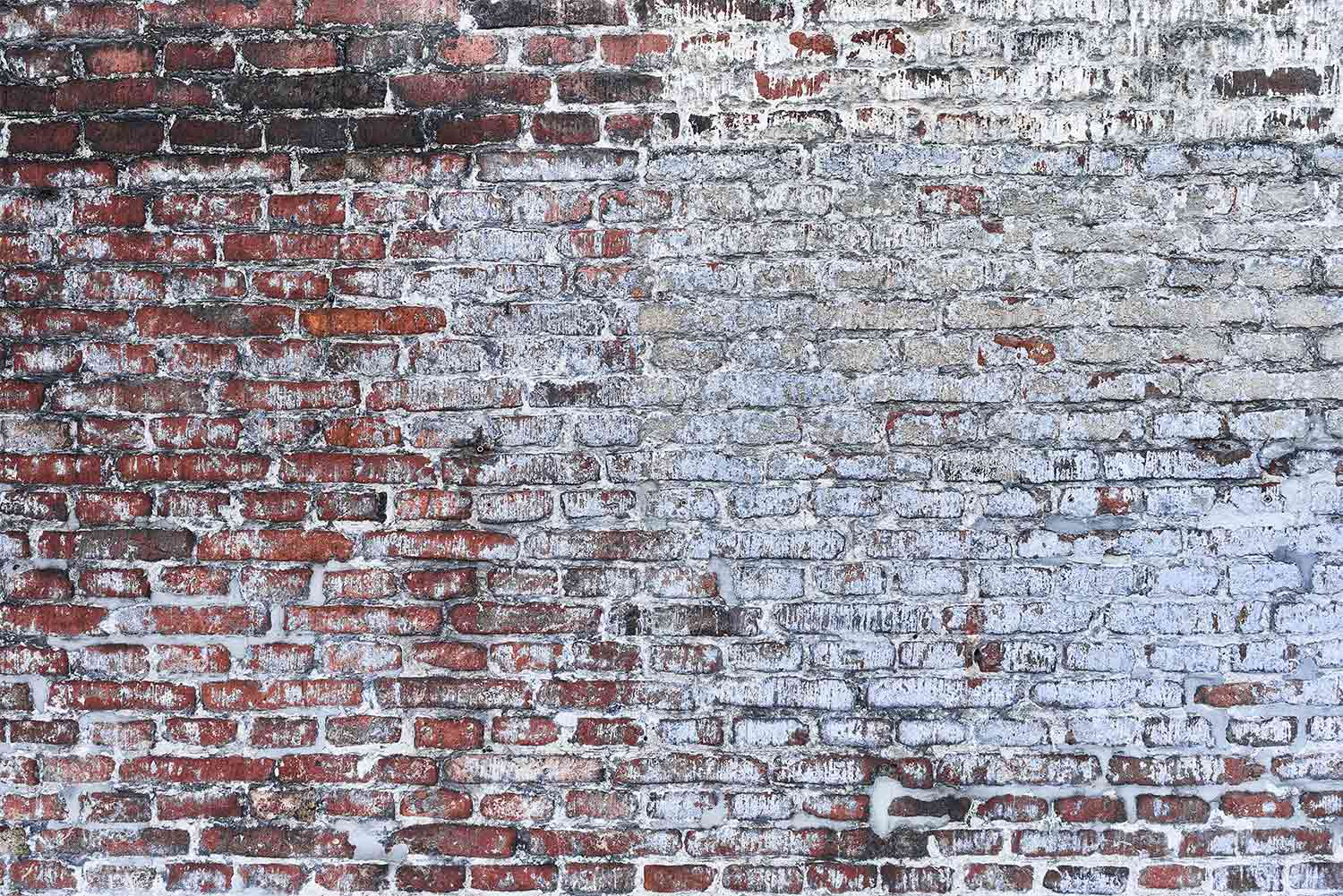
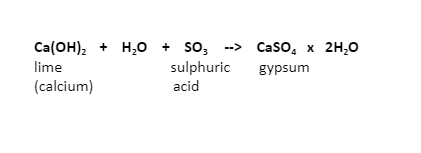
external weather and environmental conditions. Not only is this frost and rain, but also aggressive fumes and exhaust fumes which cause a very rapid corrosion of weaker mortars. They usually contain, in their composition, a binder which is susceptible to acids found in urban environment. These acids are produced, for example, by a dissolution in water of carbon dioxide or sulphur trioxide, which are present in the air. They impact a soluble lime, found in the mortar, which results in noticeable efflorescence or a complete degradation through so-called sulphate or carbonate corrosion.
Air lime mortars
Lime has been used, as one of the oldest binding materials, since the ancient times. It has been used in all mortars until the invention of cement in the 19th century. Therefore, not surprisingly, it is also widely recommended today for conservation and restoration works.
The right choice of the restoration mortar must, however, also take into account the impact of today’s industrial environment, which has a very negative effect on historic masonry.
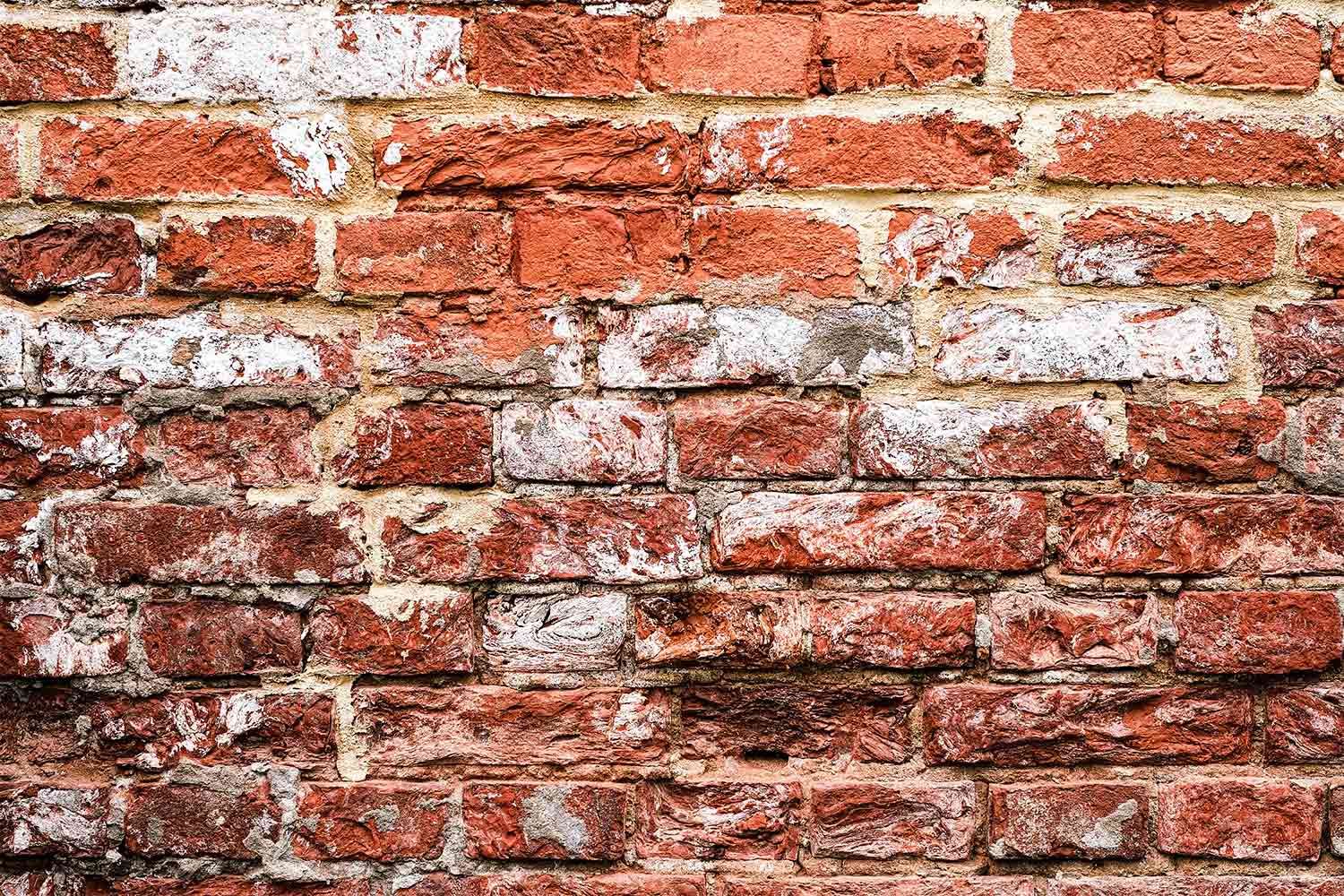
Unfortunately, due to external circumstances, the mortars based on a classic lime binder deteriorate very quickly. It is owing to the properties of the lime itself. Pure „lime mortars” have very low mechanical strength (<1N/mm2), and therefore they are not resistant to frost and soluble salts. Moreover, they are not resistant to air and water pollutants, particularly the latter containing dissolved acids. These aggressive factors cause gradual deterioration of the mortars – their settlement or even their their complete disintegration.
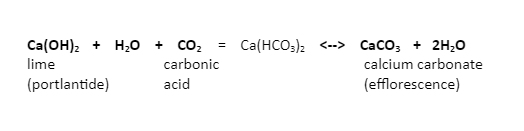
An example of degradation of already set lime mortar, in the presence of acids from the air, is illustrated by the following chemical reaction:
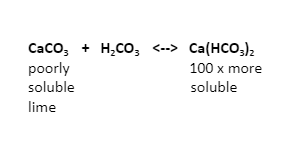
Fully bonded, sparingly water-soluble lime, in the presence of carbonic acid (water and carbon dioxide from the air) forms a very water-soluble acidic calcium carbonate. This results in its leaching and, consequently, complete destruction.
The reason for such a poor lime resistance is the mechanism of lime setting, i.e., only by carbonation under the influence of carbon dioxide, in contrast to hydraulic mortars – which set under water (Natural Hydraulic Lime NHL).
In terms of chemical composition, air lime is calcium hydroxide. This compound already sets under the influence of acids present in the air. For instance, it can form salts which destroy the mortar when they are being crystallised.
Currently, the building and restoration market offers air lime, which is available in many varieties. However, they are all characterised by similar poor resistance and low strength. Such dry-binding binders are:
- hydrated lime – commonly sold on the construction market,
- “pitted” lime – often seasoned for many years, but available less and less,
- dolomitic lime, calcitic lime, shell lime and even dispersed lime – historical and new varieties of slaked lime.
These types of air lime should not be therefore used in outdoor conditions.
Portland cement mortars
The fact, that the lime mortars deteriorate quickly in outdoor conditions, has been known for a long time. Therefore, it seemed that the invention of cement in the 19th century would effectively improve durability of restoration mortars. So, on a massive scale, the use of very strong and airtight mortars with cement, has commenced.
Unfortunately, it soon became apparent that the classic Portland cement, despite its excellent resistance, could cause a lot of damage to historic buildings. For the most part, these cements have significantly different properties in comparison to lime mortars, and originally used bricks:
- they have excessive mechanical strength,
- they contain harmful building salts – according to the allowed norms, even up to 2%,
- they have a different expansion coefficient,
- they have significantly worse capillary properties.
The faces of historic bricks might certainly be damaged if they are exposed to the use of mortars with such properties.
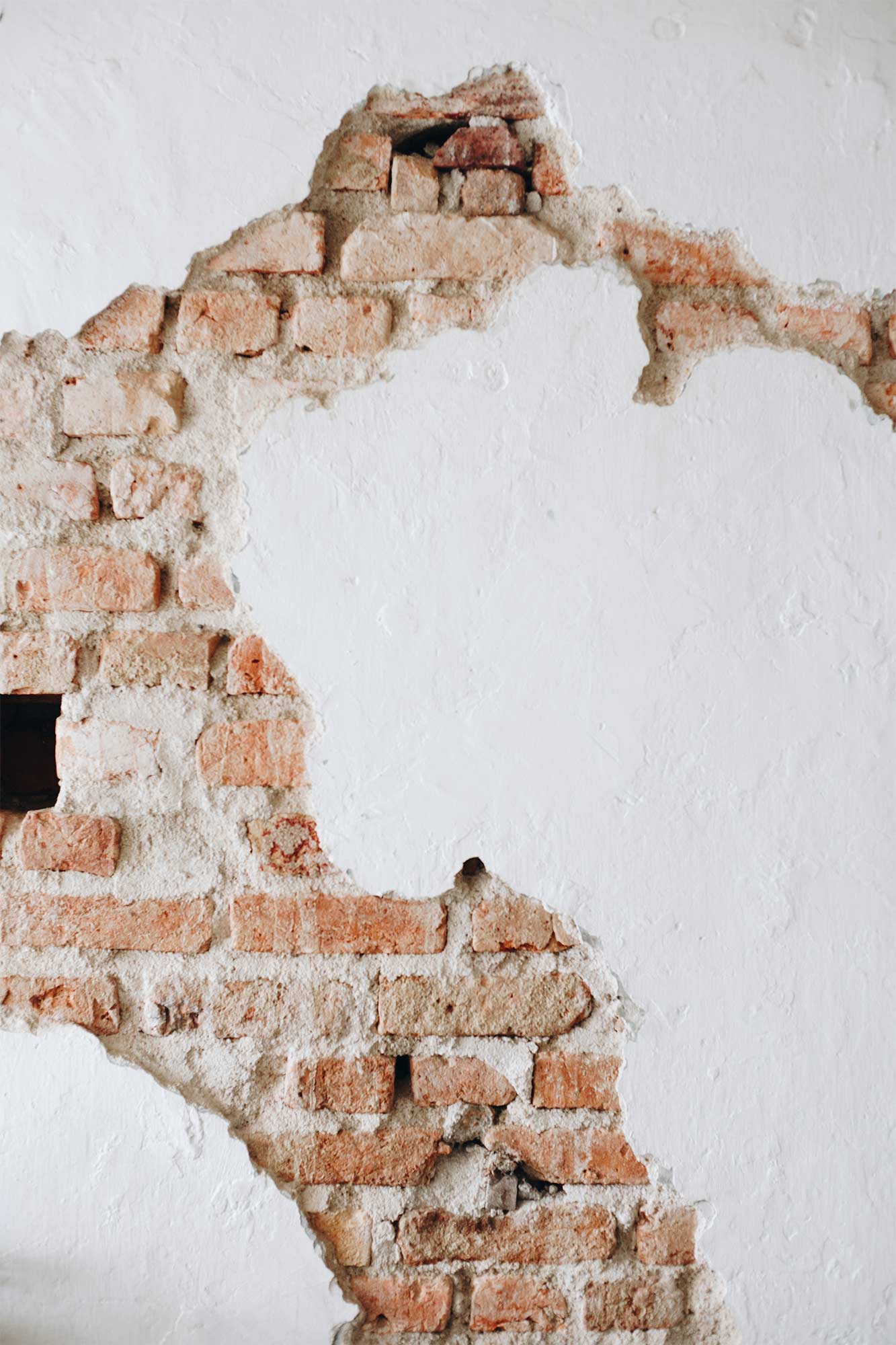
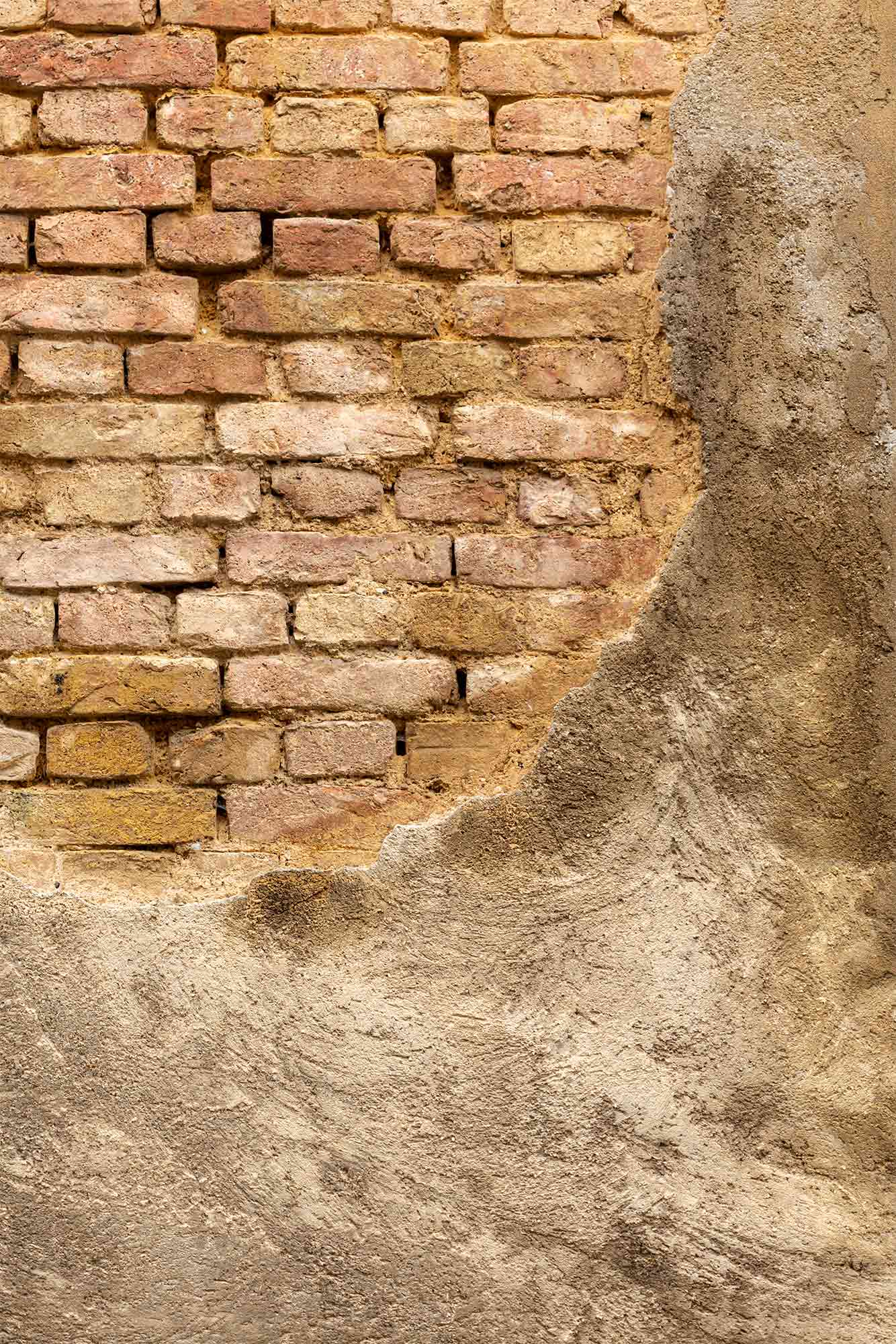
New mortars are stronger and more watertight than historic mortars. It means that water cannot be transported through joints, but through the more porous bricks. Therefore, buildings salts will accumulate at the point of contact between the bricks and the cement mortar. When these salts are being crystallised, the bricks’ faces tend to burst.
Apart from that, freezing of water cannot be transported because it is blocked by the tight cement mortar.
Finally, cement mortars do also cause lime efflorescence as they contain a free lime, so-called portlandite (it can be up to approximately 20 % of easily soluble calcium hydroxide in their composition).
Formation of lime efflorescence, from the Portland cement mortars, is shown in the chemical reaction below:
Mortars with trass – "All roads lead to Rome"
Both air lime mortars and classic Portland cements fail to meet the requirements set for them. A solution to this problem may be – to use other historical technologies.
The studies, set out to examine the original mortars, have shown that builders knew about the poor resistance properties of lime from the beginning of its application.
This is why, at a very early stage, they began to modify the classic lime mortars. Initially, they seasoned lime longer (so-called “pitting”). Finally, they made numerous additions to change the lime mortar properties, and even setting of the mortar.
As early as in Antiquity, quicklime was mixed with gypsum or brick flour. In the Middle Ages, builders added milk, heir, and cattle blood (such mortars have been discovered on the Wawel Castle in the Rotunda of St. Felix and St. Adaukt, and in Malbork in the “Buttermilk Tower”). On the other hand, in the 18th century, clay admixtures were used.
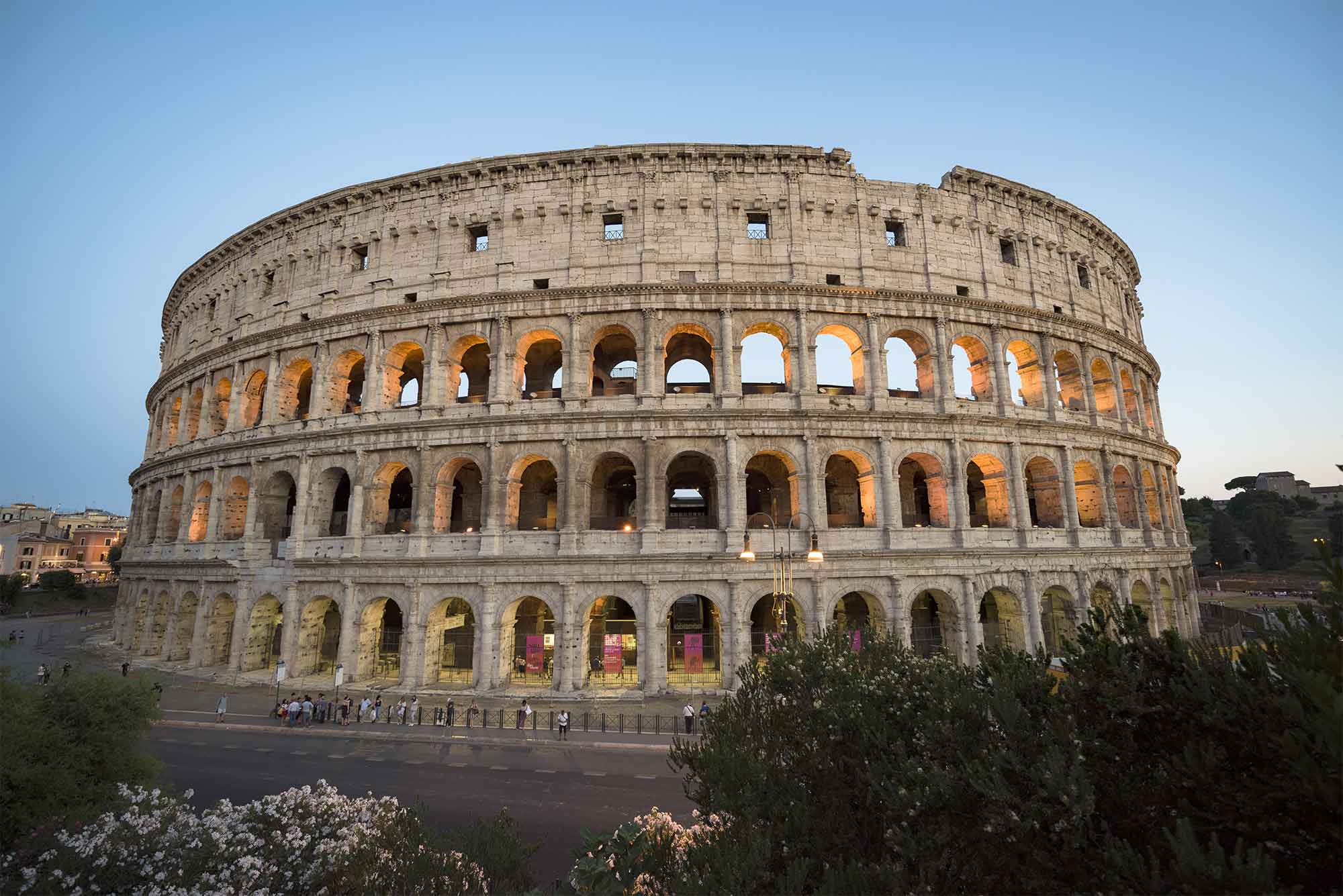
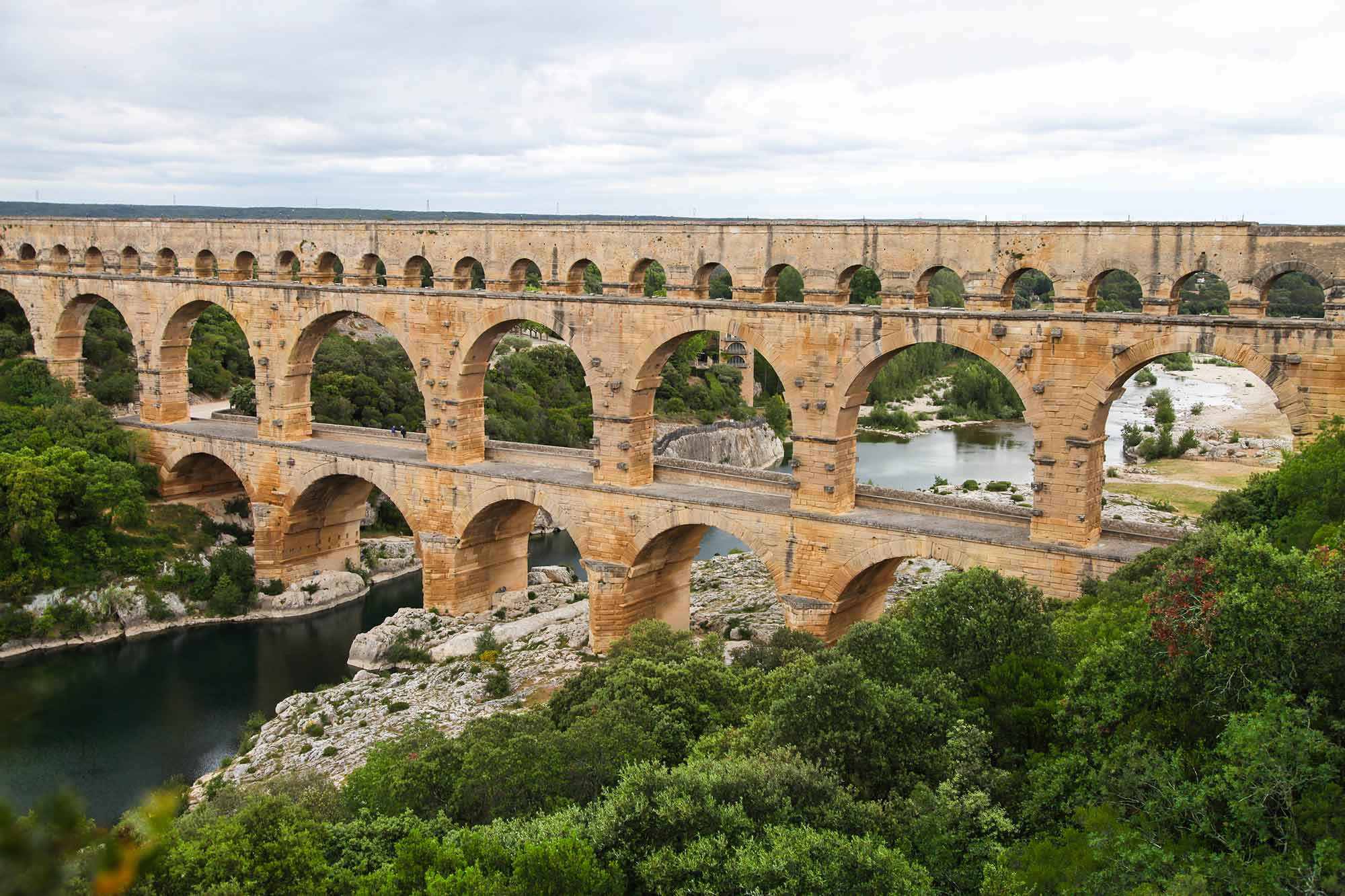
All of these additives, directly or indirectly, had enhanced the binder itself, which made it more resistant, and brought more hydraulic characteristics. However, a revolutionary discovery was brought by Romans, who used volcanic tuff (solidified lava) from the Pozzuoli area near Vesuvius.Hence, the name „pozzolana”. This modified lime mortar has completely changed the building works. Thanks to this, first truly hydraulic mortar, the Romans developed both hydraulic and hydrotechnical structures such as bridges, roads, and aqueducts. To this day, it is known under the colloquial name “Roman concrete”. It is still used today because it was the forerunner of cement. The Romans, while conquering the whole of Europe, discovered deposits of volcanic tuff in several places, e.g., in the area of Santorini, near Greece (Santorini earth), and in Rhineland and Bavaria, in Germany (trass). It is the Rhenish tuff which is still being mined and used in construction, on an industrial scale.
What makes trass-based mortars so different from classic lime mortars?
The main reason for change in mortar setting is the composition of pozzolana – trass. It contains almost 60% of active silica, which easily reacts with free lime – to form a stable, water-insoluble, and resistant to acidic environments, silicate.
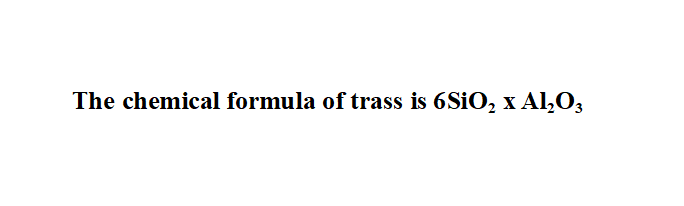
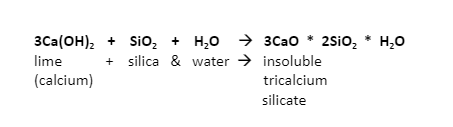
It is, therefore, a completely different chemical reaction than setting of
of aerial lime mortar, which produces, a susceptible to the acidic environment, calcium carbonate. The lime binding reaction of silica from trass has completely changed most of physical and chemical characteristics of existing lime mortars. Interestingly, although mortars with trass are hydraulic, trass itself does not bind under water. However, it is a hidden
hydraulic additive which gives, for example, a trass-based lime mortar its hydraulic properties.
Mortars with trass:
- they bind and harden under water – they are hydraulic,
- they achieve significantly higher mechanical strength,
- they are extremely durable and resistant to adverse conditions, including acidic environments,
- they bind soluble lime, which significantly reduces the risk of efflorescence,
- they ensure a high porosity and low specific weight,
- they do not contain any harmful substances because trass – is a natural rock.
In practice, lime and gravel mortars retain a high ductility and adhesion, which are both attributable to lime. If you compare them to pure, lime-based mortars – they have considerably lower shrinkage.
Trass can also be added to cement. According to the research at the University of Toruń (Poland), white cement of high grade 50, together with active silica and a large amount of aggregate, achieves very good properties including lower strength and rapid water transport. Furthermore, in contrast to classic Portland cement, it does not contain any building salts.
Thanks to these valuable advantages, trass-based mortars have been used successfully since the 1990s. Optolith® has provided restoration and conservation materials for a variety of historical buildings in Poland, but also in Germany, and in Switzerland. Numerous accomplished projects and research, carried out by conservation centres, have confirmed effectiveness and durability of this unique technology.
Trass-based lime mortarS
Co-operation with local conservation universities and many years of experience, in numerous projects, have allowed Hufgard Optolith® to develope a comprehensive and uniform mortar technology for brick and stone masonry restoration.
Optosan by Optolith® covers a full range of different mortars required for masonry works:
mortars for masonry, pointing and repair works, materials for preparation and protection of the masonry face, etc.
The majority of our mortars are based on formulas containing the original „Rhenish trass”.
These are primarily ready-mixed and factory-mixed mortars, under full quality control, right from the production stage. It guarantees a replicability of these valuable characteristics and properties, in each delivery. This is a vital concern, especially with a large scope of works, regardless of the number of teams, even in case of long renovation times. Our offer includes bonding materials as well: lime-based hydraulic binder with trass, a cementitious pozzolanic binder based on white cement. They can be both prepared individually on the construction site.
However, not only is Optosan by Optolith® an offer of standard products. Historic bricks or stone walls from different eras, which differ greatly both aesthetically and in their state of preservation, impose demanding requirements. Therefore, the range also includes mortars prepared to meet these requirements (i.e., the choice of aggregate fraction or colour, adaptation of the formulation to various application methods, or adaptation of the formulation to changed parameters, etc.).
All construction materials, developed for the Optosan system, take into account current conservation requirements both in terms of their physical and chemical properties.
Many laboratories have proved, by testing the mortars externally, that they can be used in historical buildings. Besides these rigorous tests, Optolith® building products have been used in loads of construction projects. A lot of them were of national significance and heritage, in Poland, Germany, and Switzerland.
Optolith binders with trass
Following traditions, derived from the Ancient Roman construction and modern
requirements for restoration products, the Optosan range also encompasses two main bonding materials containing trass.
Lime binder with trass – used for many years, also in Poland in HL 5 form, has now been given a lighter colour and a better ductility while retaining its original strength. This new binder, under the name Optosan TrassKalk, was very quickly recognised and won the „Grand Prix Award” at the Conservation Fair in Toruń in 2010 (Poland). It was awarded by lecturers at the Nicolaus Copernicus University in Toruń (Poland).
Cementitious binder with trass – based on a white, fast-setting, high-build cement of brand 50, with the addition of approximately 45% of trass. It is indispensable in areas requiring a higher mechanical strength. It is a very good binder for restoration works, e.g., laying of
natural stone. The scientific research, carried out by the very University of Nicolaus Copernicus in Toruń (Poland), has shown the following. In contrast to popular and inexpensive Portland cements of brand 32, both mortars with cements of the higher grades, (i.e., brands 45 and 50), with the addition of active silica, and mortars with higher amount of aggregate – achieve porosity, water transport and mechanical properties equivalent to those required for historic masonry. Optosan TrassZement meets these results and can therefore be recommended for restoration and conservation.
Mortars
Mortars for historic masonry should have adequate physical, chemical, and working properties. The Optosan group of products includes several types of such mortars, meeting these requirements in terms of the desired brand and place of application.
For masonry with normal loads, Optolith® designates the following – M5 grade, trass-based, lime mortar, characterised by very good working parameters: high adhesion, elasticity, ductility, and water retention. On request, it can also be factory-coloured in the mass. At the same time, this type of mortar satisfies the preservation requirements: mechanical strength adapted to historic bricks, fast water transport, no building salts, and low risk of efflorescence due to the addition of “Rhenish trass”.
For masonry and areas with high structural load or permanent contact with water and snow – Optolith® recommends trass-based, cement mortars with higher strength and frost resistance.
Mortars for filling voids and fissures
Structural cracks and fissures in historic walls are a frequent and serious problem. Cracks and voids usually appear deep in the masonry structure. Therefore, special mortars, with a high penetration capacity, must be used to fill them properly. It should be stressed, however, that they must not be too strong or too tight as it is the case with concrete repairs. Optolith® has developed a special lime mortar to comply even with this stringent requirement. Optosan TrassInjekt provides very good filling properties and fast water transport. It can be applied manually or mechanically. Due to its hydraulic setting, the mortar hardens even deep into the masonry. Optosan TrassInjekt also has a reduced strength to match the original mortars inside the masonry, which might be weaker. This unique product does not contain any harmful salts.
Joint mortars
Pointing of historic masonry is often the most important element in restoration and conservation. Not only is it a technological issue, but it is also a crucial aesthetic aspect. Historical walls can differ greatly from each other, e.g., regarding the type of theme, joint width, and colour. Thus, Optosan by Optolith® offers several types of joint mortars that take these differences into account.
The basic solution – Optosan TrassFuge has been developed for manual application in the most common “semi-dry” technique. It means that it does not contaminate the face of the wall. However, Optolith® provides also mortars for a mechanical application (for extruders and special aggregates). The range is completed by grouts for polygonal masonry of irregular shape and various joint widths.
On request, all Optosan grouts can be prepared in individual versions, colours, and grain sizes. They all contain, the above-mentioned, “Rhenish trass”, and therefore they perfectly eliminate the risk of efflorescence. On top of that, a fast capillary transport of water, in the masonry, is preserved. There are no harmful building salts in Optolith construction chemicals.
Mortars for reprofiling of cavities
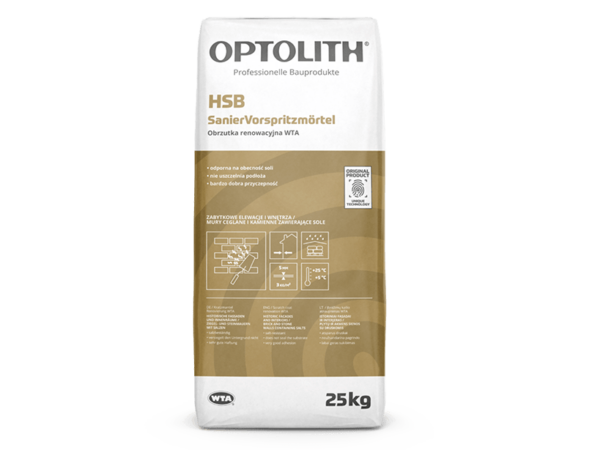
Filling of cavities in brick or stone is, probably, the most difficult and time-consuming part of restoration and conservation. The quality of this is often decisive for a final appearance of the facade works. Therefore, Optosan renovation mortars:
- they match physical and chemical properties of the restored bricks,
- they have a good water transport,
- they provide a reduced mechanical strength to approximately 6N/mm2,
- they also possess good working parameters such as ductility, low shrinkage, and a high adhesion.
All these attributes allow them to be applied in various thicknesses. Additionally, Optolith® renovation mortars are available in various colours and textures. Thanks to this, a faithful reproduction of the cavity colour, and the texture like the face of brick or stone, can be both achieved, in line with the original expectations.
Primers and mortar additives
Both restoration and conservation of brick and stone masonry often require some additional protective or preparatory measures. Their extent depends solely on the state of preservation of the substrate. Besides mortars, Hufgard Optolith® also supplies other sophisticated construction chemicals.
↓↓↓
Water repellency (Hydrophobicity)
Water repellency is a treatment that protect our walls from the damaging effects of rainwater. If done correctly, it can protect the walls for many years. Optolith® suggests using “organosilicon” solutions which, thanks to their ability to produce a high surface tension, do not seal the capillaries of the brick or stone. Thus, they effectively do not reduce vapour permeability. There are two basic products available: water-based (Optosan HydroSilan) and solvent-based (Optosan Silan), depending on the type of substrate and weather conditions.
Disinfection of masonry
Micro-organisms, algae, and fungi have an extremely destructive effect. They can irreversibly damage a surface, and even the entire masonry structure. They weaken them by increasing of moisture. Hence, chemical disinfection plays such an important part in both conservation and restoration. The main, ready-to-use, Optolith® disinfectant is Optosan Fungith, which is highly effective in both disinfection and prevention from all type of biological corrosion.
Grouting of the wall tops
Horizontal masonry such as finials, ledges or tops are particularly prone to permanent exposure to standing water and snow. If such areas are not properly protected, it can result in damage to entire layers of brickwork. In these areas, traditional porous grouts degrade very quickly due to repeated freeze-thaw cycles. On the other hand, if you use a strong and tight cement-based mortar, it can also damage the bricks, and cause scaling of too strong and too stiff rigid joints. Optolith® has found the right solution, dealing with all above-mentioned issues. You should apply Optosan HydroFlex (a water additive), based on polyacrylate resins, which, without increasing of mechanical strength, makes the mortar more elasticised. This ductility seals the mortar perfectly in the mass.
WTA TECHNOLOGY AVAILABLE now IN THE UK
Old buildings usually mean outstanding architectural and historical value. At the same time, they are a reminder of our ancestors. Their conservation and restoration is an extremely specialised field, requiring extensive knowledge of architecture, cultural history, art, technical sciences, and the latest technological developments.
The main aim is to maintain the edifice in its original form for as long as possible. However, in order to do so, you need professional products. These materials need to meet high requirements and guarantee excellent restoration results.
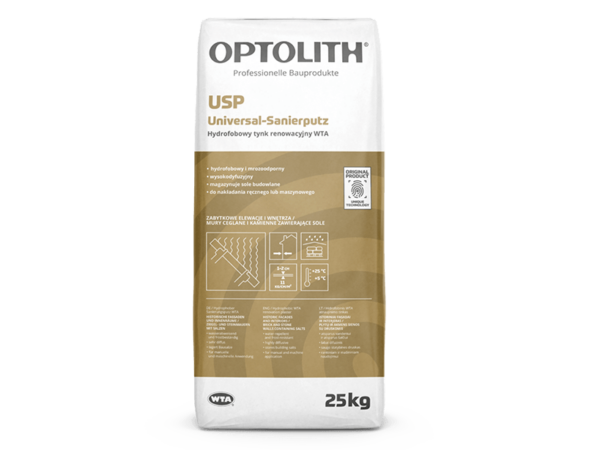
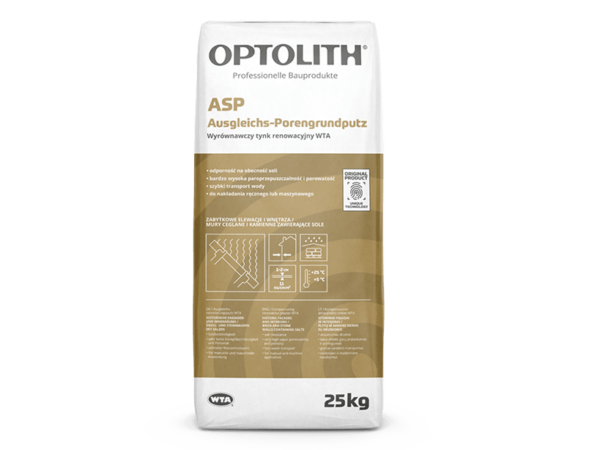
Optolith®, which specialises in building materials for the restoration and conservation of historic buildings, also offers its customers specialised WTA restoration mortars.
Why should you use WTA mortars, and what are they ?
The mortars, used in restoration, are divided into ordinary renders (e.g., pure lime renders) and those – called WTA renovation mortars, also referred to as wide-pore, solo-absorbent, and compressed mortars. These products are mainly recommended for soggy masonry, which is a result of no insulation, long years of use, water supply failures or flooding. Consequently, it always leads to the appearance of salts. Due to these salts, and not because of moisture, as it is popularly believed, paint coatings and masonry are destructed. Salts, or more precisely salt compounds, found in all building materials, rainwater or the ground adjacent to the building, are essentially harmless when dry. However, when they dissolve because of increased moisture, they migrate, i.e., they move with the water towards the surface, where the moisture evaporates. When they dry, a process of crystallisation occurs. Consequently, the salt crystals increase in volume and mechanically damage paint and render coatings.
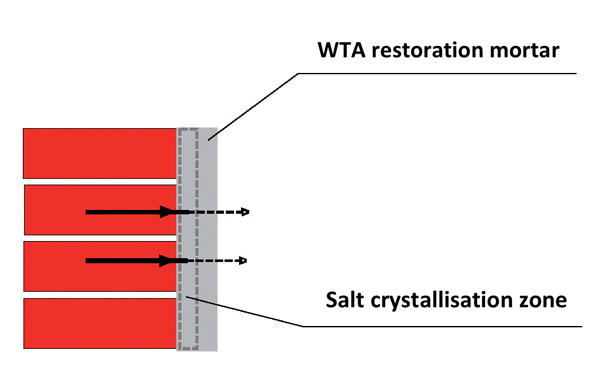
The use of traditional materials (including gypsum render) on old masonry does not give the right end result, and it usually requires another renovation later. In such case, even high investments in additional insulation or dehumidification of the building will not help, and the walls will still remain damp.
The cases, described above, have provided an important impetus for regulating and standardising the concept of restoration mortar. Eventually, the German scientific and technical organisation has issued an instruction numbered WTA-2-2-91, which sets out detailed technical requirements and inspection criteria for restoration mortars. According to the instruction, WTA restoration mortar, must absolutely possess the following properties:
- high diffusivity,
- high porosity,
- pores interconnected by capillaries.
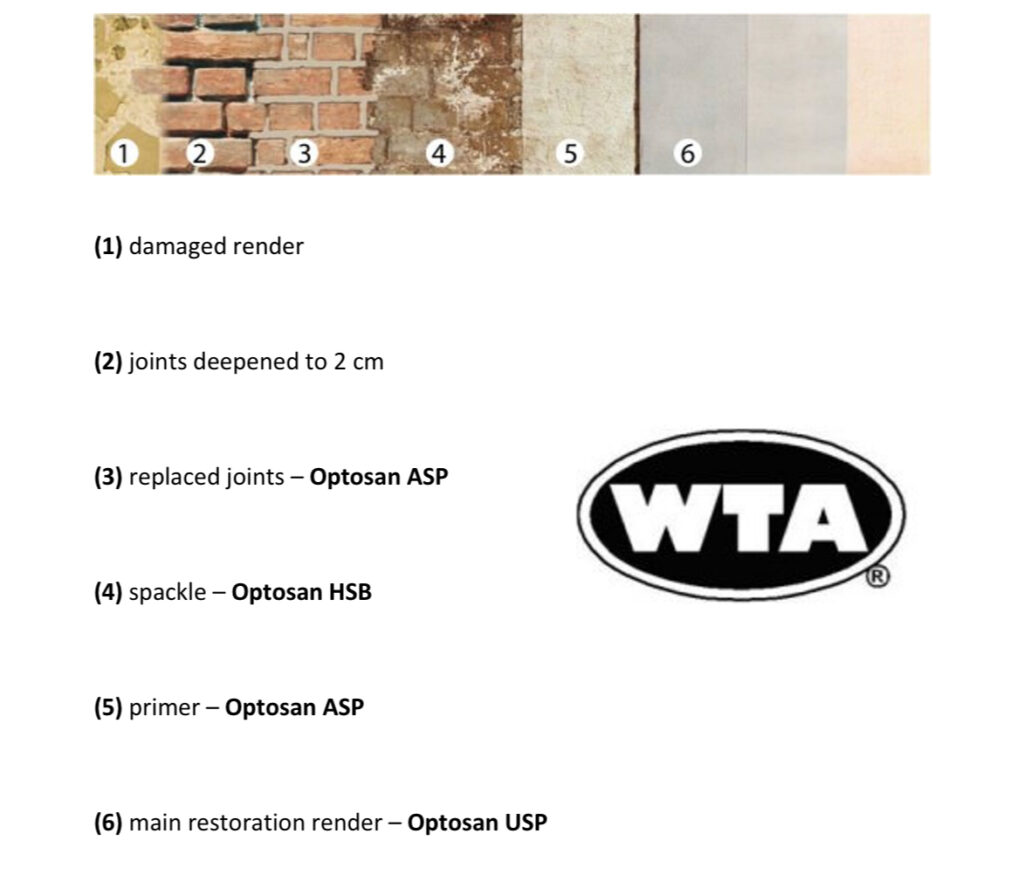
What is more, the WTA regulations precisely indicate the guidelines and recommendations for design and application of restoration mortars. Preparatory work is crucial, during which the necessary laboratory tests are carried out. They allow to assess the substrate accurately and select the appropriate technology. This is the most important stage of work on which the success of subsequent renovation depends. Hufgard Optolith® pays particular attention to ensure that this process is comprehensive, meticulous and in line with WTA guidelines. We can distinguish the following steps:
1. Salinity testing
WTA Instruction 2-2-91 clearly defines how restoration mortars are to be applied, which depends on the degree of salinity. It is due to selection of appropriate mortar’s thicknesses, which depends on many factors, including the type of salts (chlorides, sulphides, nitrates) and the quantity of these salts. Determination of the salinity level is crucial for a success of the entire renovation.
2. Selection of technology
When testing the substrate’s salinity, Optolith uses its own laboratory. Thanks to this examination, we can determine a precise number of layers required and their thickness (with reference to a specific building). We can also recommend a correct method to apply the WTA render.
Appropriate technology of renovation can be established, but a professional workmanship is always required to achieve the desired result. Once again, the expert support, provided by the building material manufacturer, is a vital concern. As a conscious manufacturer of construction materials, Optolith® does offer its customers comprehensive and professional technical advice. Our experts provide you with a sophisticated advice at every execution stage. As a result, every implementation is carried out professionally. Each conservation and restoration guarantee an excellent result.